
Thyme Care Guide
Thymus vulgaris
Also known as Common Thyme
By Ellen Hermance · PlantCareAI Editorial
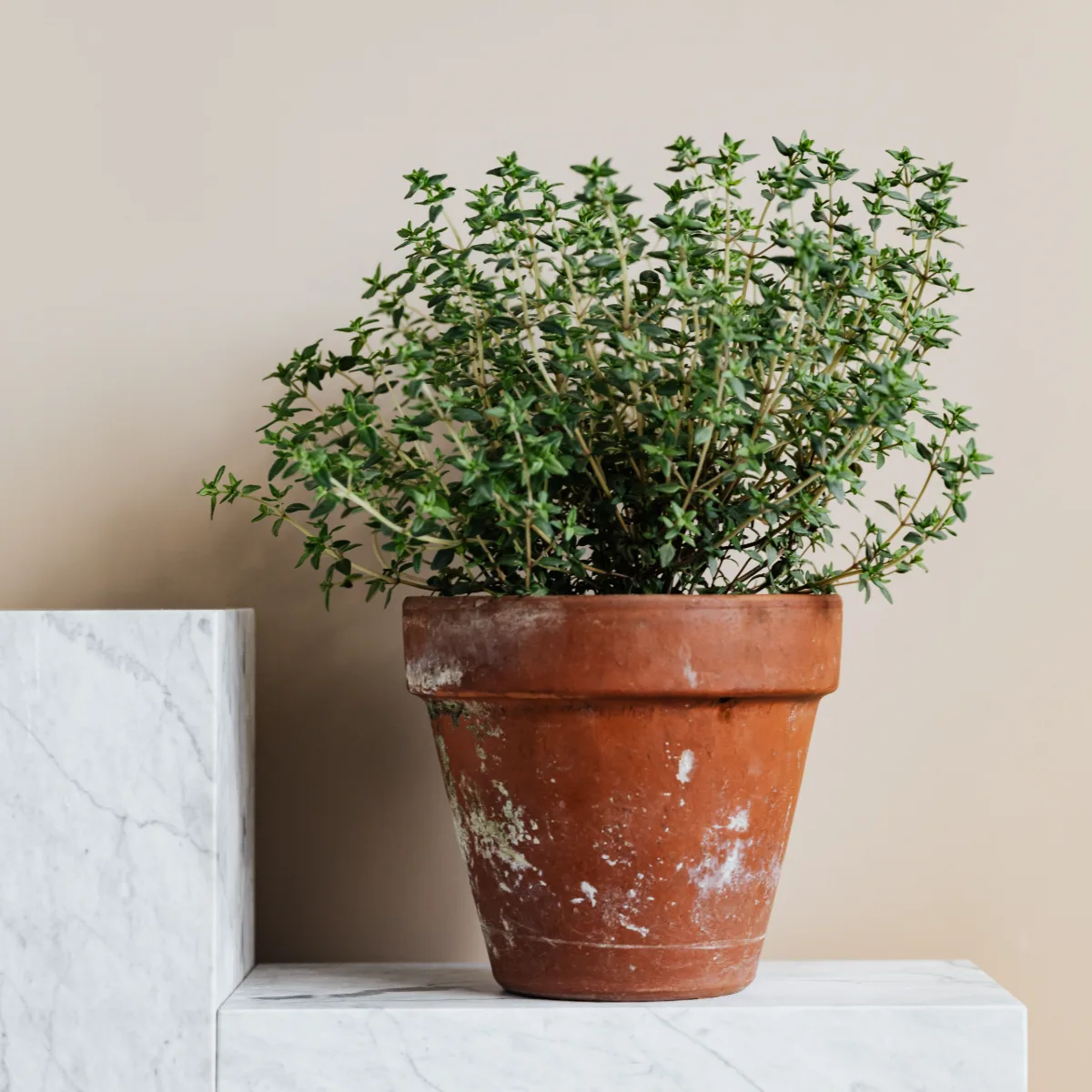
Thyme is a small, woody perennial herb from dry Mediterranean hillsides, and it grows best when treated that way. It wants full sun, sharp drainage, lean soil and very little water once established. More thyme is killed by wet soil than by cold or neglect. Trim it after flowering to keep it bushy, and expect to replace it every few years as the center turns woody.
Quick Care Reference
| Care Aspect | Requirement | Frequency |
|---|---|---|
| Watering | Let soil dry between waterings | Every 7-10 days when established |
| Light | Full sun, 6-8 hours | More sun means stronger flavor |
| Soil | Lean, fast-draining | Raised beds or gritty mix in wet climates |
| Trimming | Cut back by a third | After flowering, and lightly in spring |
| Fertilizer | Little or none | Compost at planting |
Watering
Thyme is drought tolerant once established and is far more often overwatered than underwatered. Let the soil dry out between waterings; in the ground, an established plant usually needs water only every 7 to 10 days in dry summer weather and often none when it rains. Water new plants more often for their first few weeks. In containers, water when the top inch (2.5 cm) is dry and make sure the pot drains freely. Soggy soil rots the roots quickly.
Light Requirements
Thyme needs full sun, 6 to 8 hours or more, for compact growth and strong flavor. In partial shade it grows sparse and floppy. It is happy against a hot wall, in a rock garden, or between paving stones. Indoors it needs your sunniest window and still tends to stretch.
Humidity & Temperature
Common thyme is hardy in most of the US and tolerates winter cold well, down to about -20°F (-29°C), provided the soil drains. What kills it in winter is wet soil around the crown, so do not mulch thickly against the stems. It handles summer heat easily. In humid regions, give it space for airflow and grow it in a raised bed or gritty soil.
Fertilizing
Thyme needs little or no fertilizer, and its flavor is strongest in lean soil. In the ground, a little compost at planting is enough for years. In containers, a light feed once or twice in spring and summer is plenty.
Propagation
Thyme is easiest to propagate from cuttings or by layering. Seed is slow and named varieties do not come true from it.
Stem cuttings
- Take 3 inch (8 cm) cuttings of soft new growth in late spring
- Strip the lower leaves and insert in a gritty, barely moist mix
- Keep in bright, indirect light; roots form in 3 to 6 weeks
- Move to a larger pot once new growth appears
Layering
- Bend a low stem to the ground and pin it down
- Cover the pinned section with a little soil
- Once it has rooted, usually in a month or two, cut it free and transplant
Popular Varieties
French thyme
A narrow-leaved form of common thyme with a slightly sweeter flavor; the standard choice for cooking.
Lemon thyme
Thymus citriodorus, with a clear lemon scent. Often sold in gold or variegated forms; grown the same way.
Creeping thyme
Low, mat-forming thymes used between stepping stones and as a groundcover. Covered in small flowers that bees love.
Seasonal Care Calendar
Spring
Mar – May
- Cut out winter-killed stems once new growth starts. Trim lightly to shape.
- Plant new thyme once the danger of hard frost has passed.
- Take cuttings from soft new growth.
Summer
Jun – Aug
- Harvest sprigs as needed, ideally before or just as flowering starts.
- Trim by a third after flowering.
- Water only in long dry spells.
Fall
Sep – Nov
- Stop heavy trimming about 6 weeks before the first frost so new growth can harden.
- Clear fallen leaves away from the crown.
- Pot up a plant for a sunny windowsill if you want winter sprigs.
Winter
Dec – Feb
- Leave plants alone. Keep the crown free of heavy, wet mulch.
- Water container thyme only lightly and rarely.
- Replace old, woody plants in spring.
Troubleshooting
Stems turn brown and the plant collapses, starting at the base
Why it happens: Root rot from wet, poorly drained soil
What to do: Cut out dead stems and let the soil dry. If most of the plant is gone, replace it in a raised or gritty spot, or in a pot with free drainage.
Learn more: How to Treat Root Rot → Ask the AI about this →Plant is woody and bare in the middle
Why it happens: Age, or a plant that has not been trimmed
What to do: Trim the green parts to encourage new growth, without cutting into bare wood. Layer a healthy stem to start a replacement, and replace plants every 3 to 4 years.
Ask the AI about this →Sparse, floppy growth with little scent
Why it happens: Too little sun, or soil that is too rich
What to do: Move it to full sun and stop feeding. A light trim helps it fill back in.
Learn more: Why Is My Plant Not Growing? → Ask the AI about this →Fine speckling and webbing on the leaves
Why it happens: Spider mites, mostly on plants indoors or in hot, dusty spots
What to do: Rinse the plant well and repeat every few days. Improve airflow, and move indoor plants outside in summer.
Learn more: How to Treat Spider Mites → Ask the AI about this →Not sure what's wrong?
Premium includes AI photo diagnosis, then walks you through the fix and checks back in until it's better.
See Premium →Track your Thyme with PlantCareAI
Add your Thyme and get a watering schedule tuned to this week's weather. Free for up to 3 plants.
Add your Thyme