
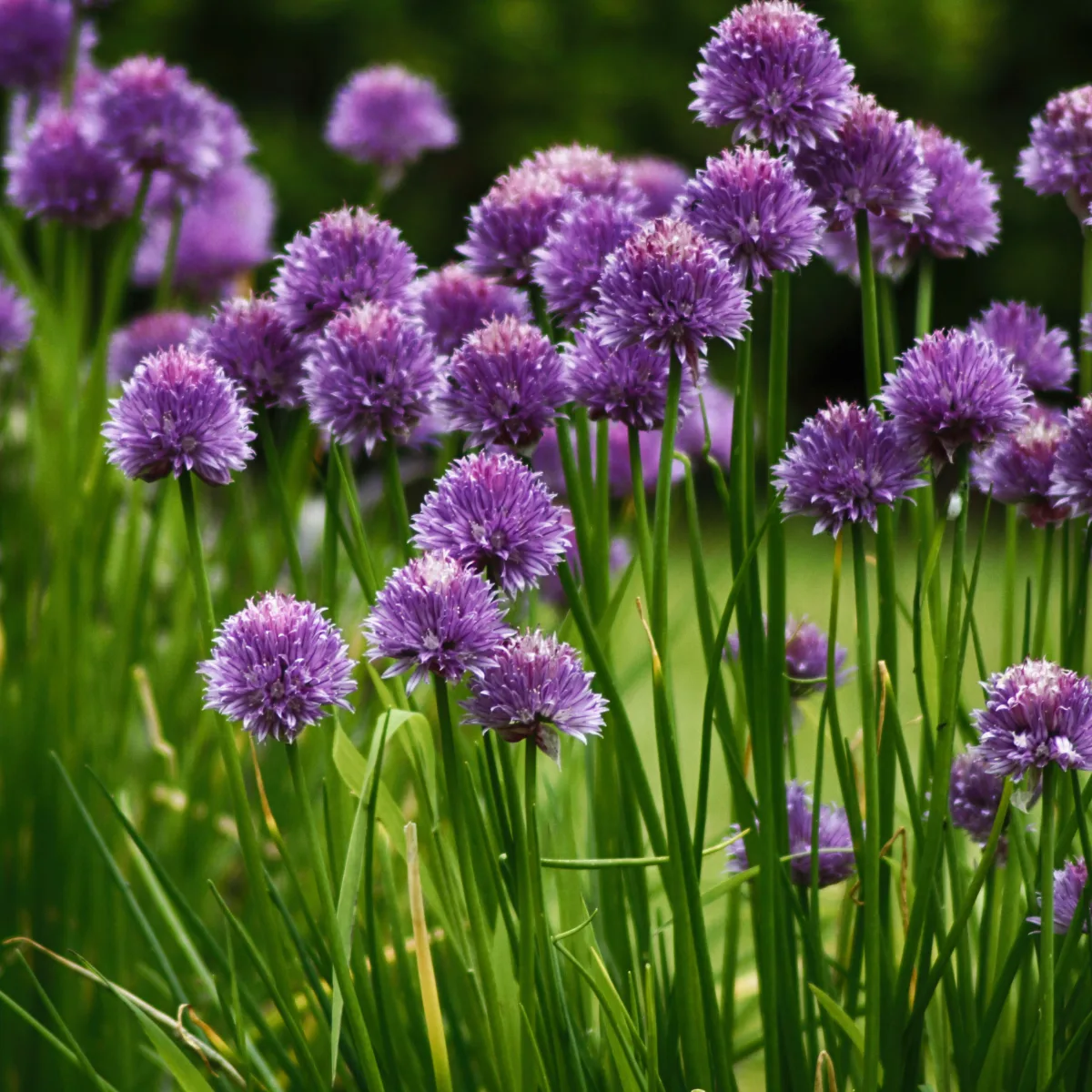
Chives are about as close to a carefree herb as it gets. They are a hardy perennial, one of the first green things up in spring, and a single clump keeps producing for years. Cut them often, divide the clump every few years, and remove the flower heads before they drop seed if you do not want chives all over the garden. They do well in a pot, though like all onions they are toxic to cats and dogs.
Quick Care Reference
| Care Aspect | Requirement | Frequency |
|---|---|---|
| Watering | Lightly moist, well drained | Every 3-5 days in summer |
| Light | Full sun to part shade | 6 or more hours for the most growth |
| Harvest | Cut leaves to 2 inches (5 cm) | Every few weeks through the season |
| Flowers | Deadhead after bloom | Before seeds drop |
| Dividing | Split the clump | Every 3-4 years in spring |
Watering
Chives like soil that stays lightly moist but drains well. In the ground, about 1 inch (2.5 cm) of water a week is enough, often a watering every 3 to 5 days in summer if it does not rain. In containers, water when the top inch (2.5 cm) is dry. Drought makes the leaves tough and the tips brown, while soggy soil rots the bulbs at the base.
Light Requirements
Chives grow best in full sun, 6 or more hours, and tolerate part shade, where the leaves are thinner and the plants flower less. In hot climates, a little afternoon shade keeps them from going tough in midsummer. Indoors they need a bright, sunny window.
Humidity & Temperature
Chives are very cold hardy and survive winters in nearly all of the US. The leaves die back after hard frost and regrow in early spring. They grow best in cool to mild weather, roughly 60 to 75°F (16 to 24°C), and slow down in midsummer heat. Average humidity is fine.
Fertilizing
Chives need little feeding. Work compost in at planting and give a light balanced feed in spring. If you harvest heavily, a second light feed in midsummer keeps the leaves coming. Container plants benefit from a half-strength feed every 4 to 6 weeks.
Propagation
Chives are easiest to multiply by dividing an established clump, and they also grow readily from seed.
Division
- In early spring, dig up the clump
- Pull or cut it apart into pieces of 5 to 10 small bulbs each
- Replant at the same depth, 8 to 12 inches (20 to 30 cm) apart
- Water well; they reestablish within a few weeks
From seed
- Sow indoors 6 to 8 weeks before the last frost, or outdoors in early spring
- Cover seed with 1/4 inch (6 mm) of soil and keep it moist
- Seed germinates in 1 to 2 weeks
- Harvest lightly in the first year so the clump can establish
Popular Varieties
Common chives
The standard hollow-leaved chive with purple flowers in late spring and a mild onion flavor.
Chinese chives
Allium tuberosum, also called garlic chives, with flat leaves, white flowers in late summer and a garlic flavor. Self-seeds heavily, so deadhead it without fail.
Seasonal Care Calendar
Spring
Mar – May
- Clear dead leaves as new shoots appear. Give a light feed.
- Divide large clumps and replant or share the pieces.
- Start harvesting once leaves are 6 inches (15 cm) tall.
Summer
Jun – Aug
- Deadhead flowers after they bloom.
- Cut the whole clump back to 2 inches (5 cm) after flowering for fresh leaves.
- Water during dry spells.
Fall
Sep – Nov
- Keep harvesting until frost.
- Pot up a small division for a sunny windowsill.
- Leave the clump in place; the leaves die back on their own.
Winter
Dec – Feb
- Plants are dormant outdoors.
- Water windowsill chives when the top of the soil is dry.
- Order seed or plan new clumps for spring.
Troubleshooting
Silvery or white streaks on the leaves
Why it happens: Thrips feeding on the leaf surface, worst in hot, dry weather
What to do: Rinse plants with a strong spray of water and cut back badly marked leaves; new growth comes quickly. Keep the plants well watered.
Learn more: How to Get Rid of Thrips → Ask the AI about this →Leaf tips turning yellow or brown
Why it happens: Drought, heat, or an old, crowded clump
What to do: Water more consistently. Cut the clump back to 2 inches (5 cm) for fresh growth, and divide it if it has not been divided in a few years.
Learn more: Why Are My Plant Leaves Turning Brown? → Ask the AI about this →Thin, floppy leaves and fewer of them
Why it happens: Too much shade, or a clump that needs dividing
What to do: Move or divide the clump in spring and replant pieces in a sunnier spot.
Learn more: Why Is My Plant Not Growing? → Ask the AI about this →Seedlings coming up all over the garden
Why it happens: Flowers left to set seed
What to do: Pull seedlings while small, and deadhead every flower from now on before it turns papery.
Ask the AI about this →Not sure what's wrong?
Premium includes AI photo diagnosis, then walks you through the fix and checks back in until it's better.
See Premium →Track your Chives with PlantCareAI
Add your Chives and get a watering schedule tuned to this week's weather. Free for up to 3 plants.
Add your Chives