
Peperomia Care Guide
Peperomia spp.
Also known as Radiator Plant
By Ellen Hermance · PlantCareAI Editorial
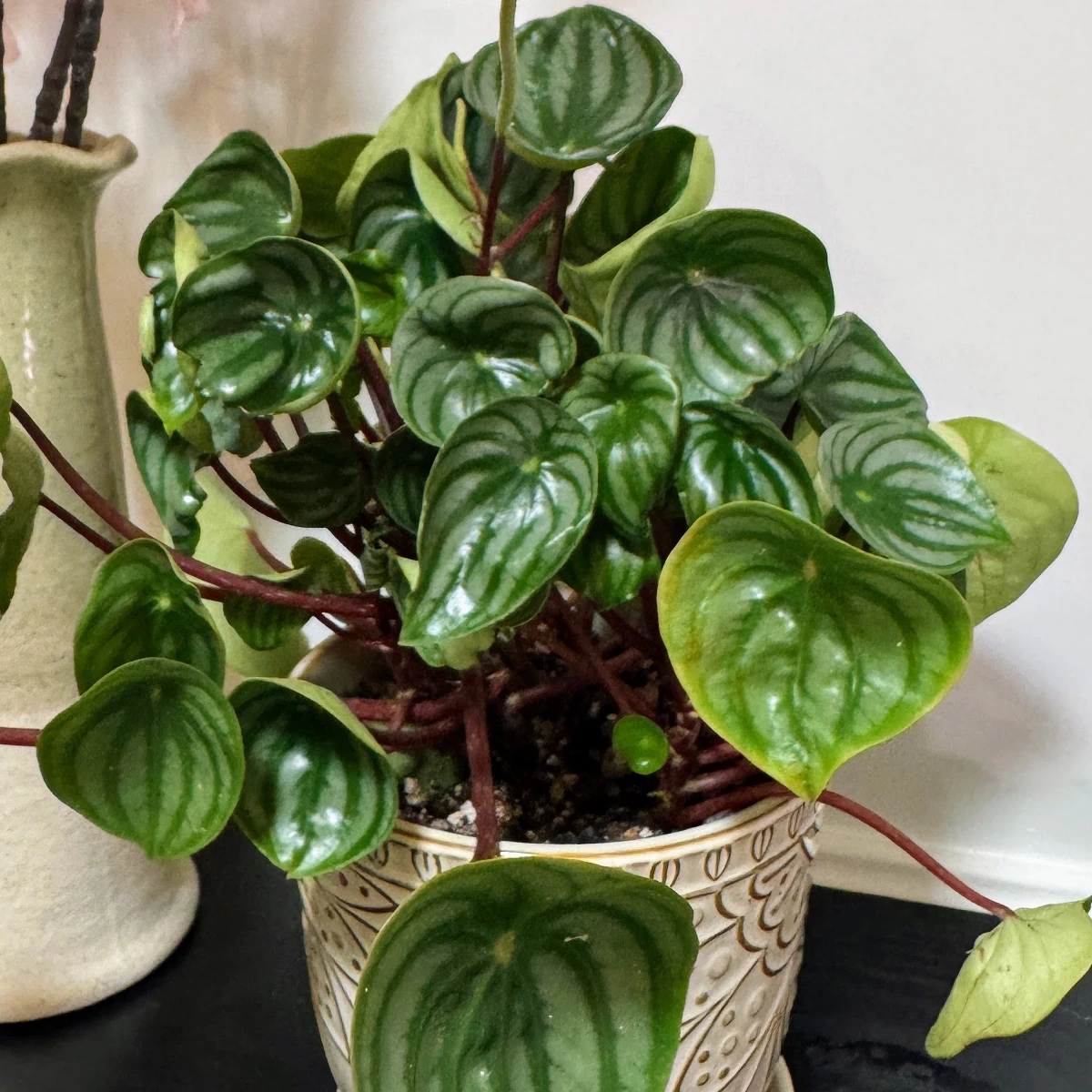
Peperomias are a diverse genus of over 1,000 species; compact, low-maintenance houseplants that come in a striking range of leaf shapes, textures, and colors. From the waxy, coin-shaped leaves of Peperomia obtusifolia to the deeply textured, watermelon-striped leaves of P. argyreia, there's a peperomia for every taste and space. They're ideal for beginners, apartment dwellers, and anyone who wants a beautiful collection without a demanding care routine.
Quick Care Reference
| Care Aspect | Requirement | Frequency |
|---|---|---|
| Watering | When top 1–2″ are dry | Every 7–14 days (spring/summer), every 2–3 weeks (winter) |
| Light | Medium to bright indirect | 4–6 hours daily |
| Humidity | 30–50% (typical home) | No misting needed |
| Fertilizing | Balanced liquid, quarter to half strength | Monthly (spring–summer only) |
| Repotting | Only when very root-bound | Every 2–4 years (they like being cozy) |
Watering
Peperomias have semi-succulent leaves and stems that store water, meaning they tolerate; and actually prefer; letting the soil dry out partially between waterings. Allow the top inch or two to dry before watering again; in warm months this is roughly every 7-14 days. In winter, extend this to every 2-3 weeks. The cardinal rule: when in doubt, skip the watering. Peperomias rot far more often from overwatering than they suffer from underwatering. Always use a pot with drainage holes and never leave the plant sitting in water. If leaves look dull and slightly wrinkled, that's the plant's way of asking for water; it's a much better cue than checking the calendar.
Light Requirements
Peperomias do best in medium to bright indirect light, making them ideal for spots 2-5 feet from an east- or north-facing window. They can tolerate lower light than most flowering houseplants but may grow more slowly and lose some of the vivid colors or patterns in their leaves. Avoid direct harsh sunlight, especially from a south or west window in summer; it fades and scorches the foliage. Variegated varieties generally need a bit more light to maintain their patterning. Peperomias also adapt well to fluorescent office lighting, making them a popular choice for desks and workspaces.
Humidity & Temperature
Peperomias are more tolerant of dry air than most tropical houseplants, thanks to their semi-succulent leaf structure. They do fine in typical home humidity (30-50%) without any misting or humidifier. Avoid cold temperatures below 50°F (10°C) and keep them away from cold drafts, exterior doors, and air conditioning vents. Ideal temperature range is 65-80°F (18-27°C). Unlike many tropicals, they don't benefit from being grouped with humidity-loving plants; their needs are modest enough that extra humidity isn't necessary.
Fertilizing
Peperomias are slow, compact growers that need very little fertilizer. Feed once a month during the active growing season (spring through summer) with a balanced liquid fertilizer diluted to half or even quarter strength. Skip fertilizing entirely in fall and winter. Overfertilizing is a more common problem than underfertilizing; too much fertilizer causes salt buildup, brown leaf edges, and stunted growth. If the soil has been in the pot for more than two years without repotting, a light spring feeding is especially useful to replenish depleted nutrients.
Propagation
Peperomias are among the easiest houseplants to propagate. Leaf cuttings work for most species, and stem cuttings work for virtually all of them. Spring and early summer are ideal, but peperomias root well year-round in a warm indoor environment.
Leaf Cutting in Soil
- Select a healthy, mature leaf and cut it from the stem with a short stub of petiole (leaf stem) attached.
- Let the cut end dry for an hour to callous slightly.
- Insert the petiole end into moist, well-draining propagation mix.
- Cover loosely with a plastic bag or dome to retain humidity.
- Keep in bright indirect light at 70°F (21°C) or warmer. A new plantlet emerges from the base in 4-8 weeks.
Stem Cutting in Water
- Cut a 2-3 inch stem tip with 2-3 leaves, just below a node.
- Remove the lowest leaves so the node is bare.
- Place in a small jar of water with the node submerged. Change water every 5 days.
- Roots appear in 2-4 weeks. Pot up in well-draining mix once roots are 1 inch long.
Popular Varieties
Peperomia argyreia
Also known as: Watermelon Peperomia
Round, flat leaves with silver stripes on dark green; a near-perfect mimicry of watermelon rind. One of the most striking peperomias and very popular. Compact grower, rarely exceeds 6 inches tall.
The most popular peperomia by far; the pattern gets more vivid in brighter (not direct) light.
Peperomia obtusifolia
Also known as: Baby Rubber Plant
Glossy, waxy, oval leaves in deep green or variegated cream and green. Upright growth habit, very tolerant of low light and inconsistent watering. Frequently confused with real rubber plants but much smaller.
Among the most tolerant peperomias; a good choice for beginners or dim rooms.
Peperomia caperata
Also known as: Ripple Peperomia, Emerald Ripple
Deeply textured, heart-shaped leaves with ridged, quilted surfaces in dark green or reddish-brown. Produces interesting rat-tail flower spikes. Compact and slow-growing.
One of the most tactile houseplants; the ridged leaves are irresistible to touch.
Peperomia polybotrya
Also known as: Coin-Leaf Peperomia, Raindrop Peperomia
Large, raindrop-shaped leaves with a glossy, deep green surface. Grows more robustly than most peperomias, reaching 12 inches. A bold choice that bridges the gap between compact peperomias and larger foliage plants.
Larger and faster-growing than most peperomias; great for a statement plant on a desk or shelf.
Seasonal Care Calendar
Spring
March – May
- Resume monthly feeding at quarter strength
- Repot only if visibly root-bound (roots emerging from drainage holes)
- Take leaf or stem cuttings for propagation
- Gradually increase watering as days lengthen and growth resumes
Summer
June – August
- Water when top 1-2 inches of soil are dry
- Continue monthly light fertilizing
- Move away from direct sun if near a south-facing window
- Wipe leaves gently if dust accumulates
Fall
September – November
- Begin reducing watering frequency
- Stop fertilizing by October
- Move away from cold windows as temperatures drop outside
- Inspect for fungus gnats; overwatering in fall is common
Winter
December – February
- Water every 2-3 weeks only; let soil dry fully between waterings
- Do not fertilize
- Keep away from cold drafts and below 50°F (10°C) temperatures
- Add a grow light if natural light drops significantly in your space
Troubleshooting
Mushy stems or rotting base
Why it happens: Root rot from overwatering is the most common cause of peperomia death. Their semi-succulent tissues mean they have very low tolerance for continuously wet soil. Compact, poorly draining potting mix worsens the problem by holding moisture too long.
What to do: Stop watering immediately. Unpot the plant and remove all soft, brown, or black roots. Let the remaining healthy root tissue air-dry for several hours. Repot in fresh, very well-draining mix (add 30-50% perlite). Hold off watering for 7-10 days after repotting.
Learn more: Am I Overwatering My Plant? → Ask the AI about this →Wrinkled or limp leaves
Why it happens: Paradoxically, both overwatering and underwatering can cause limp, wrinkled leaves. If the soil has been very dry for a week or more, underwater stress is the cause. If the soil is wet and the leaves are still limp, root rot may have damaged the roots' ability to take up water.
What to do: Check the soil moisture first. If dry, water thoroughly. If wet, let dry out and check roots. Healthy underwatered peperomias perk up within hours of watering. If roots are damaged, treat for root rot as above.
Learn more: Am I Overwatering My Plant? → Ask the AI about this →Leaf drop or leggy growth
Why it happens: Sudden leaf drop often follows a cold draft, temperature shock, or relocation to a darker spot. Leggy, stretched growth (long stems, widely spaced leaves) is a response to insufficient light; the plant stretches toward the nearest light source.
What to do: Move to a brighter spot; medium to bright indirect light at a minimum. For cold-shock leaf drop, move to a stable warm location and give the plant 4-6 weeks to recover. New growth will be compact in better conditions.
Learn more: Why Is My Plant Not Growing? → Ask the AI about this →Yellowing leaves
Why it happens: Overwatering is the most likely cause. Less commonly, very low light or natural leaf shedding in older, lower leaves. Unlike some plants, peperomias don't yellow significantly from underwatering; underwatered peperomias wrinkle before they yellow.
What to do: Reduce watering frequency and ensure the soil dries out between waterings. Check drainage holes are clear. If overwatering has been prolonged, inspect roots and treat for root rot if needed. Remove yellowed leaves to keep the plant tidy.
Learn more: Why Are My Plant Leaves Turning Yellow? → Ask the AI about this →Not sure what's wrong?
Premium includes AI photo diagnosis, then walks you through the fix and checks back in until it's better.
See Premium →Track your Peperomia with PlantCareAI
Add your Peperomia and get a watering schedule tuned to this week's weather. Free for up to 3 plants.
Add your Peperomia