
Cast Iron Plant Care Guide
Aspidistra elatior
Also known as Aspidistra
By Ellen Hermance · PlantCareAI Editorial
The Cast Iron Plant earns its name: it tolerates low light, drought, temperature swings, dust, and neglect that would kill most houseplants. Its dark, glossy strap-shaped leaves grow slowly and methodically, making it the ideal choice for dim hallways, offices with no windows, or anyone who wants a genuinely forgiving plant. It does not ask for much, but rewards patience with long-lived, handsome foliage.
Quick Care Reference
| Care Aspect | Requirement | Frequency |
|---|---|---|
| Watering | Top 2 inches dry | Every 2-4 weeks |
| Light | Low to medium indirect | No direct sun |
| Humidity | 30-60% (very adaptable) | No special treatment needed |
| Fertilizer | Half-strength balanced | Monthly spring/summer only |
| Repotting | Prefers to be rootbound | Every 3-5 years |
Watering
Water deeply but infrequently. Allow the top 2 inches of soil to dry completely before watering again, which typically means every 2 to 3 weeks in spring and summer and every 3 to 4 weeks in fall and winter. The plant stores water in its thick rhizomes and is far more tolerant of underwatering than overwatering. Always empty the saucer 30 minutes after watering to prevent root rot. Use room-temperature water; cold water can shock the roots.
Light Requirements
Cast Iron Plant is one of the few houseplants that genuinely thrives in low light. It tolerates dim rooms, north-facing windows, and spots several feet from any window. Medium indirect light produces slightly faster growth, but the plant does not require it. Direct sun burns the leaves and causes yellowing; keep it out of south or west windows without a sheer curtain.
Humidity & Temperature
Cast Iron Plant tolerates low humidity (as low as 30%) without any special treatment, making it well-suited to air-conditioned and heated spaces. Temperatures between 45 and 85°F (7 to 29°C) are acceptable; it can handle brief cold spells down to freezing if kept indoors. Avoid hot air from heating vents blowing directly on the leaves.
Fertilizing
Feed once a month in spring and summer with a balanced liquid fertilizer diluted to half strength. Do not fertilize in fall or winter. The Cast Iron Plant is a slow grower and does not need heavy feeding; over-fertilizing causes brown leaf tips. If growth seems very sluggish, check light levels before adding more fertilizer.
Propagation
Cast Iron Plant is propagated by dividing its rhizome clumps at repotting time. It cannot be propagated from leaf cuttings.
Rhizome division
- Remove the plant from its pot in spring
- Gently separate the rhizome clump into sections, each with at least 2 to 3 leaves
- Use a clean knife if the roots are tightly bound
- Pot each division in fresh well-draining potting mix
- Water lightly and keep in medium indirect light until established (4 to 6 weeks)
Popular Varieties
Aspidistra elatior 'Variegata'
Cream and green striped leaves; grows slightly slower than the standard form.
Aspidistra elatior 'Milky Way'
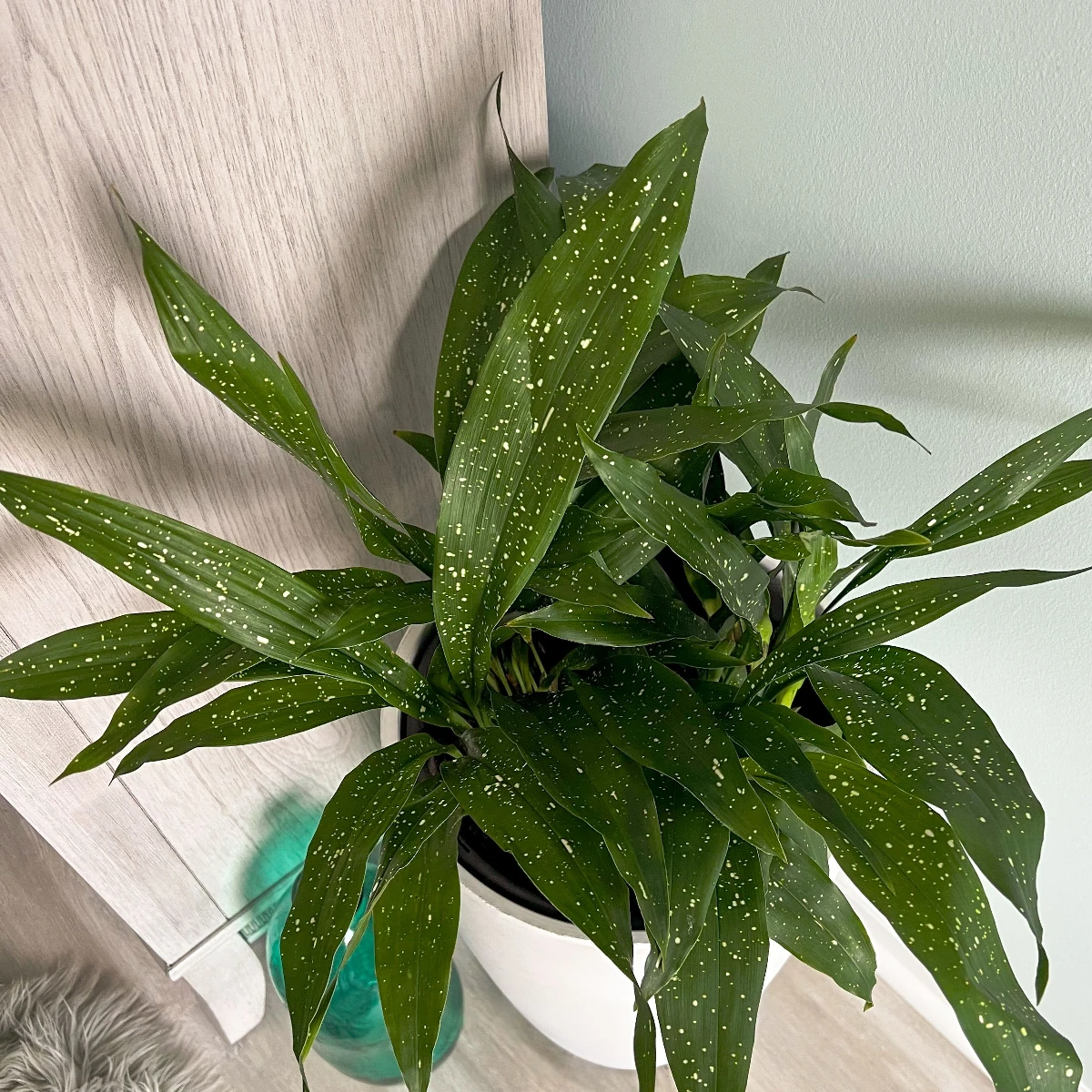
Dark green leaves with small cream or white spots resembling stars.
Aspidistra elatior 'Asahi'
Tips of mature leaves turn white, creating a striking two-tone effect.
Seasonal Care Calendar
Spring
Mar – May
- Resume fertilizing monthly. Increase watering slightly as growth resumes.
- Check for new shoots emerging from the soil. Wipe leaves if dusty.
- Continue monthly fertilizing and regular watering.
Summer
Jun – Aug
- Water every 2 to 3 weeks. Feed monthly. Keep out of direct sun.
- Continue regular care. Growth is slow but steady.
- Check soil moisture before watering; hot rooms dry soil faster.
Fall
Sep – Nov
- Reduce fertilizing. Taper watering as growth slows.
- Stop fertilizing. Water every 3 weeks.
- Reduce watering to every 3 to 4 weeks. Keep away from cold drafts.
Winter
Dec – Feb
- Water every 3 to 4 weeks. No fertilizer.
- Minimal care. Check soil is dry before watering.
- Continue infrequent watering. Wipe leaves to maximize light absorption.
Troubleshooting
Yellow leaves
Why it happens: Overwatering or direct sun
What to do: Check soil moisture; if soggy, reduce watering and improve drainage. Move out of direct sun.
Learn more: Why Are My Plant Leaves Turning Yellow → Ask the AI about this →Brown leaf tips
Why it happens: Over-fertilizing, fluoride in tap water, or very low humidity
What to do: Flush soil with distilled water, switch to filtered water, and reduce fertilizer concentration.
Learn more: Why Are My Plant Leaves Turning Brown → Ask the AI about this →Very slow or no new growth
Why it happens: Normal growth rate or insufficient light
What to do: Move to a slightly brighter spot. Growth is naturally slow; expect 2 to 4 new leaves per year.
Ask the AI about this →Bleached or scorched leaves
Why it happens: Direct sun exposure
What to do: Move away from direct sun. Scorched areas will not recover but new leaves will be undamaged.
Ask the AI about this →Not sure what's wrong?
Premium includes AI photo diagnosis, then walks you through the fix and checks back in until it's better.
See Premium →Track your Cast Iron Plant with PlantCareAI
Add your Cast Iron Plant and get a watering schedule tuned to this week's weather. Free for up to 3 plants.
Add your Cast Iron Plant