
Tradescantia Care Guide
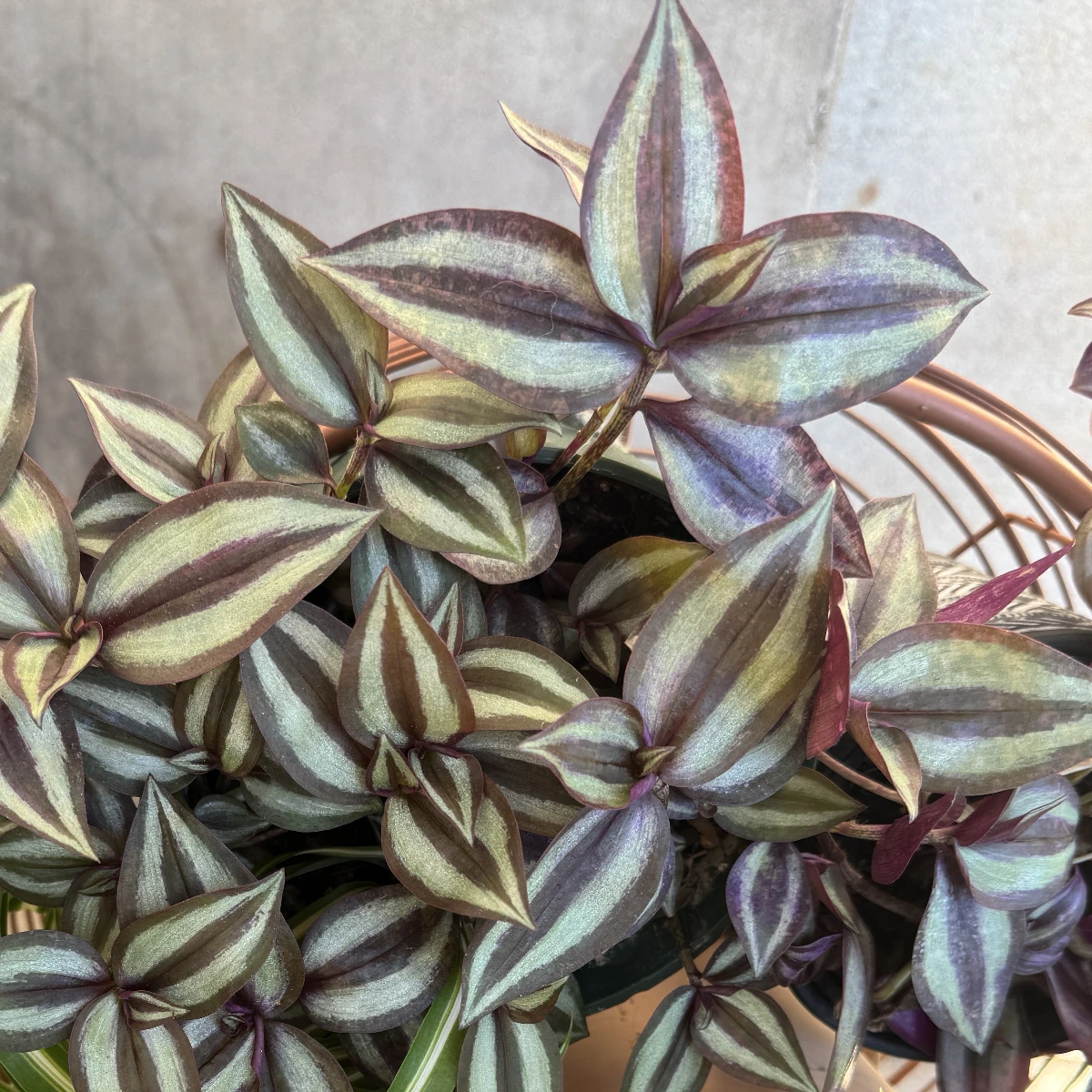
Tradescantia zebrina
Also known as Wandering Dude, Inch Plant, Spiderwort
By Ellen Hermance · PlantCareAI Editorial
Tradescantia, commonly called Spiderwort or Wandering Dude, is one of the fastest-growing and most colorful trailing houseplants available. Its striking leaves come in combinations of purple, silver, green, and pink depending on the variety. Native to Mexico and Central America, it is an extremely forgiving plant that thrives in a wide range of conditions. Tradescantia grows so fast it practically propagates itself.
Quick Care Reference
| Care Aspect | Requirement | Frequency |
|---|---|---|
| Watering | Top inch dry | Weekly (summer), every 10-14 days (winter) |
| Light | Bright indirect | No intense afternoon direct sun |
| Humidity | 40-60% (adaptable) | No special humidity needed |
| Fertilizer | Half-strength balanced | Monthly spring/summer |
| Repotting | When rootbound | Every 1-2 years |
Watering
Water when the top inch of soil feels dry, typically once a week in spring and summer. In fall and winter, allow the top 2 inches to dry before watering. Tradescantia tolerates some drought but wilts dramatically when too dry; it recovers quickly after watering. Avoid overwatering, which causes root rot. Water at the base of the plant to keep leaves dry and prevent fungal issues.
Light Requirements
Tradescantia needs bright indirect light to maintain its vivid leaf coloration. Purple and silver variegation fades to green in low light. It tolerates some direct morning sun, which intensifies leaf color. Medium indoor light is acceptable for green-leaved varieties but will cause variegated types to lose their markings. If colors are fading, move the plant to a brighter location immediately.
Humidity & Temperature
Tradescantia adapts well to average home humidity (40 to 60%) and does not require high humidity. Keep temperatures between 60 and 85°F (15 to 29°C). It tolerates cooler temperatures down to 50°F (10°C) but may lose lower leaves. Avoid frost. The plant is not fussy about its environment as long as it receives adequate light.
Fertilizing
Feed monthly during the growing season (spring through summer) with a balanced liquid fertilizer diluted to half strength. Stop fertilizing in fall and winter. Tradescantia is a light feeder; over-fertilizing causes excessive leafy growth with reduced coloration. A monthly dose during peak growing season is sufficient.
Propagation
Tradescantia is one of the easiest plants to propagate. Cuttings root in water within a week.
Stem cuttings in water
- Snip a 4 to 6 inch stem just below a leaf node
- Remove leaves from the bottom 2 inches
- Place in a glass of water in bright indirect light
- Roots appear in 5 to 10 days
- Pot in moist potting mix once roots reach 1 inch
Popular Varieties
Tradescantia zebrina
Silver and purple striped leaves; the most popular variety.
Tradescantia pallida 'Purple Heart'
Solid deep purple foliage. Excellent for high-contrast displays.
Tradescantia fluminensis 'Tricolor'
Green leaves with white and pink striping.
Seasonal Care Calendar
Spring
Mar – May
- Resume weekly watering. Begin monthly fertilizing.
- Fast growth resumes. Take cuttings to propagate or refresh the plant.
- Peak growing season. Pinch regularly to keep compact and bushy.
Summer
Jun – Aug
- Water consistently. Colors are most vivid with bright summer light.
- Continue regular care. May produce small pink or purple flowers.
- Continue summer care. Refresh bare or leggy plants with new cuttings.
Fall
Sep – Nov
- Reduce fertilizing. Slightly reduce watering as growth slows.
- Stop fertilizing. Water every 10 days.
- Reduce watering to every 10 to 14 days. Maintain bright light.
Winter
Dec – Feb
- Water every 10 to 14 days. No fertilizer. Ensure bright light to maintain coloration.
- Continue minimal care. Pinch leggy stems to encourage new growth.
- Minimal care. Water every 2 weeks. No fertilizer.
Troubleshooting
Fading color (turning all green)
Why it happens: Insufficient light
What to do: Move to a brighter window with more indirect or morning direct light. Color returns with new growth.
Ask the AI about this →Bare lower stems
Why it happens: Natural aging as vines grow
What to do: Take cuttings from the healthy growing tips and propagate them back into the same pot to refresh the plant.
Ask the AI about this →Wilting despite watering
Why it happens: Root rot from overwatering
What to do: Check roots for brown mushy sections. Trim rotted roots and repot in fresh mix. Reduce watering frequency.
Learn more: Root Rot in Houseplants → Ask the AI about this →Brown leaf tips
Why it happens: Low humidity, underwatering, or salt buildup
What to do: Water more consistently, increase humidity, and flush soil every 2 to 3 months.
Learn more: Brown Leaves on Houseplants → Ask the AI about this →Not sure what's wrong?
Premium includes AI photo diagnosis, then walks you through the fix and checks back in until it's better.
See Premium →Track your Tradescantia with PlantCareAI
Add your Tradescantia and get a watering schedule tuned to this week's weather. Free for up to 3 plants.
Add your Tradescantia